Monday, August 17, 2015

Peach Habanero Glazed Wild Hog Ham


       First of all I need to thank www.HuntingTexasHogs.com for the incredible experience at a great price!  3 days, 2 hogs, with lodging, all meals, guide service, butchering, etc..........$299!  Yep, that price is correct.  There are many, many hogs on this ranch and the entire experience is first class!  My hunt took place in mid-December 2014 and my next one will be in January 2016.  It was my first hunt and as such I chose to harvest a medium size feeder hog that I could butcher and freeze in our RV for coming travels.  The largest brutal tuskers taken during our stay was 505 lbs., with 2 more over 400 lbs.  Mine was 118 lbs.  BTW....the grey duck tape on the hog is to mark our ID number for after processing....

      I have to say that all the stories about wild hogs are grossly exaggerated.  Until butchered they do have an incredible gamey smell, but once butchered and cooled in a locker there is virtually no gamey smell at all.  In fact, we cooked our hog several different ways to include Crock Pot Tenderloin, Pork Fajitas, Pitchfork Steaks, and of course.....the hams.   This is the last of our hams, the first having been prepared the same way and enjoyed with a good friend of ours in Las Cruces, NM.  My only piece of advice on cooking is plenty of seasoning, marinade, or crock pot cooking.  The meat when properly butchered has a fairly plain taste and requires lots of 'chef help' to get it where you want it to be.  Done properly, it is very delicious! 
      So here we are, late summer in NW Michigan preparing our last WH Ham.  We begin with a thawed ham that is injected with Morton's Sugar Cure and then floated in the same brine mix for 2 weeks.


      When done remove the ham and dry it, discarding the brine.  I rubbed Apple Bourbon Rub on the ham; recipe can be Googled.

      I had already lit the fire in the backyard fire pit and gotten a good bed of maple coals going when I skewered the ham on my AusSpit and then place it over the fire. 
      I have had my www.auspitbbq.com/for several years now and I have to say that it does a wonderful job over any campfire preparing any meat from ribs to chops, to roasts to just about anything you desire.      


      This is the ham over maple wood after 3 hours.  About now I begin to drizzle honey over the ham about once every 45 minutes or so. 
 
 
      This is the ham over maple wood after 5 hours.  The meat will be getting close to completion.  Which makes it time for the glazing.  I like to use a product I found in Central Texas last year.....Peach Habanero Sauce.  
        A delightful sweetness of peaches curbed with the natural smokiness of Habanero Peppers.  A delicious spiciness, but NOT HOT.  The ham is further roasted for another hour after glazing.  Finishing a ham can be tricky, but the initial brining/injecting of the ham in sugar cure ensures safe results.  
       After 6 hours remove the ham from the fire, remove the skewer, and place it on a cutting block or plate, allowing it to rest for about 10-15 minutes.  Slice and serve.  We served ours with corn o' cob and deviled eggs, but individual choices rule.  I  can't wait till my next hog hunt in January.....Bon Apetite'


Saturday, July 25, 2015

The Mind's Eye: Inspirationism

     
Cover Photo:  Crescent City, CA
 
  Inspirationism is defined as the belief in some form of divine inspiration.       

      I have enjoyed the art of photography for many years, peaking back in the mid 70s to late 80s when I was stationed overseas and could afford decent equipment.  I have always had an idea of what I wanted to accomplish, but needed to learn the hardware aspect.  Now it's the new millennium and the equipment has once again been redefined.  The advent of the microprocessor in a DSLR format has opened doors for thousands, if not millions more folks to enjoy.  I decided to get back into the game after my last retirement and during the last two years have acquired not only two more cameras with all the gear I dreamed of, but a new partner as well.  Barb has been an eager and talented amateur as she has persevered not only the learning process, but the teacher as well.
       I had accumulated several dozen of what I consider to be quality photographs.  Most were taken with one of the two Nikons I own, one with my IPhone, and still another with an older Sony digital 2.3 MP camera I had back in the early 2000s.  The photo of Misery Bay in the Upper Peninsula of Michigan is that picture, proving that two dozen megapixels is nothing without the mind's eye.  I was going to frame a couple of these for our home and RV, but decided to try the publishing route to see if there was any demand that I should try and go farther. 

      I paid for this project myself after having some success with Shutterfly and our Alaska Collection that I am using for Christmas gifts.  This collection is a 30 picture photo essay with inspirational quotes, poems, and funnies.  There are color and B/W photos of landscapes, wildlife, and even people.  It is not a large book, but it is a hard bound book that would make a nice addition to any coffee table.  This first shipment is quite small (a teaser?) and only a limited number are available.  I will sell them locally for $25 and for those needing shipping the cost will be $30.  A note:  anyone interested that I will be visiting with this fall/winter on our next trip can simply message me to save one and I will deliver it personally as we pass through.  For local folks I would prefer a message to this blog post or to me on Facebook.  I will deliver them to you personally.  I do have standing orders from 6 folks, both local and otherwise, but message me regardless to be sure.  I welcome this opportunity to share my work with you and welcome any and all criticism.  If this project meets with surprising demand then I have another publisher I will be contacting in Washington that can provide larger quantities for me at hopefully less cost. 
   

Thursday, July 23, 2015

Boondocking 201


      Barb and I have been home for a couple of months now, leaving only to rockhound in the Upper Peninsula last month.  We are going back out for a short 5 day stretch shortly as we attempt to assimilate our new puppy, Roux, into the camping lifestyle. 
     I have had several requests for information as to how we do it; boondocking in general I assume.  By definition boondocking camping off the grid, without access to electricity, water, or other amenities associated with RV parks and commercial campgrounds.  It can also apply to state forest primitive style campgrounds available in every state for a reduced rate, about $13 or less.  In British Columbia and the Yukon these campgrounds even provided free firewood!  My parents RVd for years, but they were always into RV parks and campgrounds that offered all the bells and whistles.  They liked the camaraderie of other senior citizens, the weekend potluck dinners, and groups getting together.   It may have been inexpensive at one time, but these days such campgrounds easily cost $30-35 nightly and those aren't the really nice ones either.  We will never be in to that lifestyle.  We do sometimes camp with other people or groups and this is not to say that every once in awhile we won't spend the $$ and hook up with everybody else, but this is mostly to have access to dumping, laundry, and groceries.  We are off grid an average of 70% of the time. 
      Home is where you make it and we enjoy the solitude of being by ourselves.  This is not 'Glamping'.  Let's face it, we're trying to get away from it all.  This is not without it's considerations.  You must be able to sustain yourself as well as your RV without hookups for up to days or weeks at a time.  You don't have to be in the middle of nowhere either; towns are often nearby requiring only a short commute to resupply.  Let's break it down one utility at a time:

1)  Power.....this means electricity.  You can run off your RV battery, but NOT for very long.  The average 25-27 series battery will only power your lights for about a day or two TOPS!  You can upgrade your current battery with one of the 29 series batteries that are very HEAVY DUTY DEEP CYCLE.  Interstate or Trojan are good examples, but they will not be cheap.  The easiest alternative to this is a small portable generator.  I use a Honda EU 3000 which supplies us with 3000 watts of power on 3 gallons of gas for up to 19 hours.  However, if we run the microwave or air conditioning for longer periods of time our duration is more like 8 hours.  YOU CANNOT RUN YOUR MICROWAVE OR A/C OFF A "STANDARD" BATTERY SETUP.  Honda does make generators in the 1000 and 2000 watt range as well for less money.  The last alternative is either solar power or a wind turbine to power your rig and recharge your battery.  We have a suitcase set of 130 watt solar panels we hook up to the on board RV battery during the day or when we're not home.  Additionally, in the back of the truck we have a 4-battery bank of 4 Trojan T-105RE 6 volt batteries that are wired series-parallel and hooked to the RV when in camp and at night.  This bank is powered by a 230 watt panel roof mounted (and tilt able) on our truck cap that can easily charge (on sunny days) and even when traveling down the road.  There are many companies that deal with portable and RV mounted solar panels; too many to list actually.  Research here pays off.  As for wind turbines I have no experience, but only cause I haven't purchased one yet.  Air-X is the brand I am researching. These systems can provide mounting challenges, but can also recharge your battery system. 
RESOURCES:
 www.primuswindpower.com/wind-power-products/air-30-turbine-2/
 www.trojanbattery.com
www.interstatebatteries.com
http://powerequipment.honda.com/generators

2)  Fresh water.....this is a pretty easy one.  Boondocking rarely provides fresh water opportunities.  Sometimes when in primitive campgrounds well-pump water will be available.....this is good, but requires patience and human horsepower to fill water jugs.  Most times I try to 'water up' at the closest town prior to camping, but I also have an extra 40 gallon water tank in the back of our truck that we can fill up and drain into the RV when needed.  Do be careful when watering up when hauling prior to camping as your truck may not appreciate the extra weight.  Water = 8 pounds per gallon.  Also, I carry a 120 volt Wayne Water Pump that I run through a system of 3 Culligan T-filters (30 micron-10 micron-.5 micron) with the last filter also utilizing Sodium Dichlor as a purification agent prior to entering the RV fresh water hookup.  This is a standard hot tub or spa chemical blend which is perfectly safe for washing dishes, cooking, or showering, but not drinking.  We carry bottled water for this.  The water pump is powered briefly from the Honda generator, taking only about 10 minutes to fill the 40 gallon tank. 

3)  Dumping.......this is the only weak link in the boondocking chain.  Grey water isn't such a big concern as it can be dumped into a freshly dug hole away from the RV and sometimes even recycled.  By this I mean when we boondock I fill 3 gallon jugs from the grey water dump and then use this as flush water in the toiled when needed.  This saves a gallon a day of fresh water easily, but is added to your black water tank.  Black water is the Achilles Heel of boondocking.  There is no safe or clean method of disposing of this without a visit to an approved dump.  This is where the occasional campground comes in.  However, many truck stops offer free dumping for RV's as does many RV dealers and even Cabela's.   In fact Cabela's offers an area set aside for RVs for overnight parking with horse corrals and dog kennels as well!  You can delay the black water issue as much as possible by using it only at night or for sudden impulse use.  Primitive campgrounds often offer vault style toilets and there is, of course, always the woods. 

4)  Camping......there are so many free or very reduced camping areas in American that you can't hardly believe it.  Yes, WalMart is one of them, but not all of them.  They are only designed for overnight use and it pays to ask inside first.  They are always polite and helpful.  We have found the rest of these by several apps on our IPhones as well as several websites that are extremely helpful.  There are MANY folks out there on the road that will help you find what you're looking for as well. 
I have found these websites very helpful for locating what I need when I need it.  Also, check out other blogs online cause there are so many of us out there doing this that the wealth of information grows daily. 

www.rvboondockingnews.com
www.freecampgrounds.com
www.allstays.com/apps/walmart/htm
www.wheelingit.us/about/
http://freecampsites.net
www.your-rv-lifestyle-rv-lifestyle.com
www.rv-boondocking-the-good-life.com
www.campendium.com

      These sites not only provide off the grid camping info as well as free camping, but offer many tips and ideas which I have copied myself.  This is very large, sharing family....everyone just trying to rediscover America while sharing a buck or three!  There are no easy fixes or formulas.  I am constantly retuning or upgrading my system as we go.  As of today we have been off grid about 85 days this calendar year and saved upwards of $2150 dollars.  This includes deductions for generator gas and oil changes as needed. 
     My last real piece of valuable advice is to just GET OUT THERE AND EXPLORE THIS GREAT NATION.....the only mistake you can possibly make is to feel you will always have enough time. 

Monday, June 22, 2015

Michigan's Upper Peninsula: Lake Superior, Boondocking, Beaches, Agates, and Bones


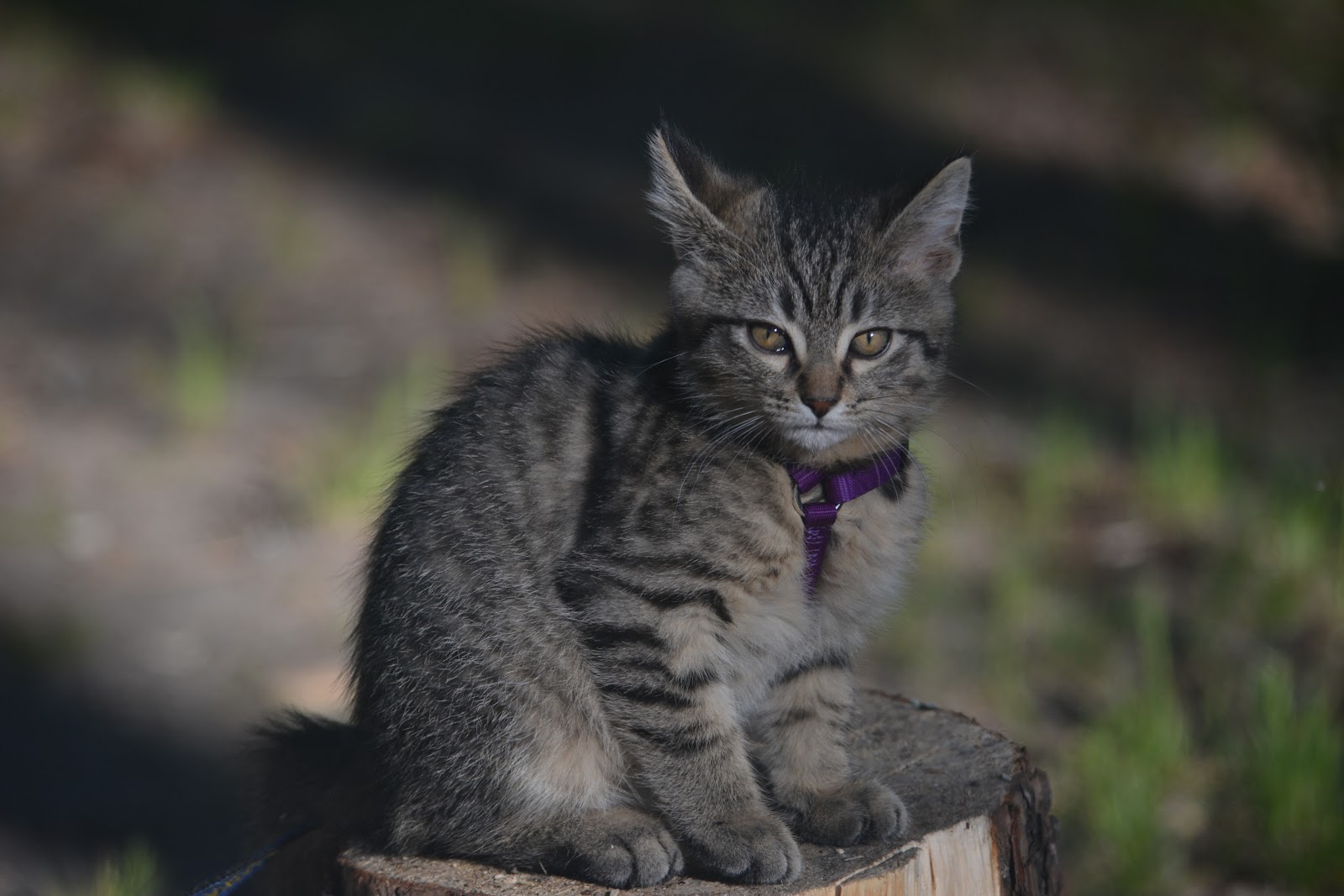
      Having been home about 7 weeks now battling home maintenance and insurance issues we decided to get back out 'off the beaten path' once again.  In addition our new kitty, Bones needed to be exposed to life on the road in preparation for this winter. 
      For us camping in Michigan can mean only one thing: UPPER PENINSULA!  Michigan can best be described as a three-dimensional state.  There is, of course......Detroit and all the metropolitan areas downstate.   We have been there when needed, but it ain't us.  There is also the thousands of acres of rolling farmlands and orchards that encompass so much of the state that nobody (outside of Michigan) even knows exists.  Villages, fruit stands, farmer's markets, and many, many downhome folks.  Then there is the Upper Michigan.  This can also include the extreme NW part of the state with hills, woodlands, and beaches, but for Barb and I this ultimately means the Upper Peninsula (UP).
 
      This trip meant 'rock hounding'.   There is no finer place in Michigan to camp 'off the grid' than the shores of Lake Superior.  Beautiful, rough, rocky beaches with plenty of sunshine and wilderness.  We have camped along much of the shore of the UP from Whitefish Point to Copper Harbor.  A favorite of ours has been either Agate Beach near Toivola or the mouth of the Two Hearted River north of Newberry.  This trip we wanted to explore the area between Deer Park and Grand Marais.  We began our journey NW of Newberry and Deer Park camping at Lake Superior State Forest Campground.  A DNR primitive campground, it offers only vault toilets and hand pump wells.  Cost per night = $13.  We did 'water up' at Muskellonge State Park (7 miles east) on our way in.  Once in camp we set up our normal boondocking protocol.  We also brought 12 gallons of gas and our generator if needed.  We did make 40 gallons of on board water last 8 days. 


     This trip was also to assimilate Bones the Wondercat into the world of camping and get him used to the RV so that he doesn't go ballistic on our trip south this winter.  He actually did very well, loving the new abode.


       He was free to wonder, scamper, and frolic throughout the rig and that he did!  He wasn't very impressed with the screendoor due to the fact that he could often see me and Barb, but was not able to let him self out.  He was let out plenty during the trip and despite the inconvenience of the long leash he loved the outdoors......so many squirrels, so little time.  Although he wasn't any help with the cutting and gathering of firewood, he did seem to enjoy watch Mommy and Daddy sweat.  Mission accomplished.
         Besides a palisades of natural beauty, Lake Superior offers some very good rock hounding not only for agates, but Jasper, Unakite, Epidote, Petrified Wood, and just an assortment of pretty stones.  The lake is not often calm and the relentless crashing of waves sometimes on even the mildest of days offers the chance for new samples to be turned over every day. 


Walking the beaches rockhounding is a peaceful endeavor for us.  The solitude and beauty of nature allows us to relax and get back in touch with ourselves.  Barb likes to carry her 'scooper' stick/basket to sift out the stones while I enjoy getting wet and sandy most times. 
 

Our first couple of days walking the local beaches turned up several nice specimens, including a beautiful 8 ounce piece of Petrified Wood. 
 
      One day we ventured east to the mouth of the Two Hearted River, another beautiful spot where we camp/hunt on occasion.  We picked up several more very nice specimens of agate, including one that was part of a larger basalt matrix. 
  
 
      The best time for hunting is right at 'ice out' which is when the beaches and lake are finally thawed and exposed after a long winter freeze.  The gigantic ice boulders move around plenty of material exposing tons of new material previously undiscovered.  We were not that brave this spring as we wanted a relaxing trip with plenty of reasonable weather and not such an urgency for firewood and propane.  We brought back nearly a gallon zip loc bag of samples.  These are just a small portion of our bounty. 


       We also brought back several larger pieces that I will cut shortly just to see 'what's inside'.  Rough agates never look the same as the polished final product.  Most times they are gnarly, pitted, chunks with just a small window to see what's inside.  Sometimes they are waxy, yet translucent making the process a bit easier.  Sometimes you just guess and take them home to cut open and see.  Any waste after cutting becomes part of one of the most colorful driveways in Northern Michigan. 
      This area of Michigan is quite beautiful, offering just about anything you want to do or see.  There was a group of wind surfers, fisherman, and paddle boarders from Wisconsin while we there and they provided entertainment during our breaks from walking the beaches.  Muskellonge Lake State Park and the village of Deer Park is only 7 miles to the east and the village of Grand Marais only 12 miles to the west, offering any supplies and services you might need.  It is one of our favorite places to camp.  We did have limited cell reception and internet at camp, but not enough to post this till we return home. 
      Heading back home now......only a couple of days off to regroup, mow the Ponderosa and then head to Detroit for another 'Bucket List' item:  Jimmy Buffet and the Coral Reefer Band at the Riverfront Park! 


Sunday, May 31, 2015

Basque Lamb


      We so thoroughly enjoyed the Basque cultural influence of northern Nevada this past winter that we purchased 20 pounds of lamb from a local rancher including a rack of lamb, 4 tenderloins, several lamb chops, and a very nice 5 pound leg of lamb.  Nearly all of this has already been devoured either by us or during our visit to Mom's.  Lamb is a very good meat.  The taste is more closely akin to pork, but with a somewhat sweeter taste.

      For many years I would always smoke a leg of lamb in the spring over cherry wood after a Chardonnay/Mint marinade for a week.   This year I wanted to try something completely different, most notably Basque.  Once thawed the lamb is marinated in the following for 4-5 days: 

4 cloves of garlic, crushed
1 Tb salt
12 peppercorns, crushed
8 allspice berries, crushed
8 juniper berries, crushed
1/2 Tb thyme
1 bay leaf, crushed
2   3" inch strips of orange zest
1 white onion, peeled and quartered
1 bottle of red wine, your choice


Let marinade in refrigerator for 4-5 days, turning several times daily.  Remove roast from marinade and dry well.  Save marinade.  Rub with olive oil.  Place roast in roasting pan.  Top with additional seasonings and rosemary sprigs.  Roast at 300 degrees allowing 25 minutes per pound.  Baste every 30 minutes with heated marinade.  Transfer to a platter, strain juices in pan, and remove excess fat (there will be some).  Strain any remaining marinade and add to pan juices.  Cook juices down to 2 cups. 


      Slice the lamb thinly and serve topped with juice.  I accompanied this with Basque Potatoes and a nice salad.  A very nice addition to this meal was the visit by Jody and Juanita Arnold, good friends of ours from Salado, TX.  We were honored to share this meal with them.  Thanks to another good friend of mine, Jesse Shanks of San Marcos, TX I served a very nice Terre Siciliane Nero D'Avola red wine which held up well against this meal.   
 
     This recipe for lamb was delicious.  In addition to the compliments of our guests, Barb and I found this to have finer flavor than our previous Chardonnay Mint Marinade.  The potatoes and salad were delicious sides and the wine was the perfect accompaniment.  We followed up the meal with some Pecan Pie and a bit of ice cream to complete the experience.  

http://www.europeancuisines.com/A-Small-Collection-Of-Basque-Recipes http://www.food.com/recipeprint.do?rid=129807

Monday, May 18, 2015

A Brief Geologic History of the U.S. (or how we learned to love rock hounding)

     My first introduction to rock hounding and polishing was through my grandfather in the early 60s.  He ran a small tumbler in his basement and introduced me to the wonders of Agates, Tiger's Eye, Opal, and Apache Tears.  I thought they were cool and kept a few for years.  About 10 years ago my best friend started to tumble a few of his own after several trips to Montana where he gave me several really beautiful Montana Moss Agates, probably still my favorite to this day.  To this day I still keep a small moss agate in my pocket as a good luck charm.  Little did I realize that Barb and I would so thoroughly enjoy this passion during our travels that we would actually plan trips around it.  Even before retirement we made several trips to the Upper Peninsula of Michigan in search of Lake Superior Agates, Jasper, Unakite, Fossils, Copper, and various lesser known varieties.  The UP is a treasure chest of the geologic history of North America.  The lakes themselves are evidence of the contoured path the great glaciers carved throughout their tour during the Ice Age. 

 
      I am still in the 'rookie' stage, having accumulated basic equipment, but a lack of area to display my treasures.  I do posses a dual 3 pound tumbler. 
 
....as well as a much larger 12 pound tumbler for larger loads of rocks. 
 
 
      Each batch of rocks from start to finish through the rough, fine, pre-polish, and final polish processes takes 8 weeks.  Of course any stones that you have jewelry aspirations for have to be shaped and drilled prior to polishing.  We are only beginning to experiment with this process this summer.   
      There is a virtual catalog of the different types of tumblers and polishing accessories, but suffice it to say that I have been very happy with my Thumler's Tumblers.  Their durable (and quiet) rubber barrels do a fine job with easy access to any spare parts needed.  Of course I now buy my polishing media in bulk sizes.  
      I was also fortunate enough to receive an older table model wet tile saw from my buddy that I equipped with a diamond blade good enough to cut small slabs or cabochons. 
 
 
      Although I would like a bigger, more professional rock saw/lapidary setup, the cost is far too prohibitive for my ambitions.  
      Retirement further broadened the opportunities to explore our passion.  Since April 2014 we spent the summer in Alaska and toured the U.S. from Michigan to Missouri, Oklahoma, Texas, New Mexico, Arizona, Nevada, California, Oregon, Washington, Idaho, Montana, and the Dakotas enroute back home.  Rockhounding for us has been leisurely exercise combined with relaxation and enjoying the great outdoors.  In addition, Barb has dabbled into the prospecting arena throughout our travels as well.  She panned for gold in Alaska, although she felt it was too much work for little reward.   
       She has had much more success panning for sapphires in Montana.  In two trips she has accumulated nearly 160 sapphires, including 9 gem quality stones that are being heated and faceted as I write this. 
 
      Interestingly, not all sapphires are naturally blue.  They have to be heat treated to obtain this color.  ONLY the Yogo Sapphires from near Utica, Montana are naturally cornflower blue.  These gems are fairly rare and expensive.  Even Princess Diana had one on her engagement ring; now Prince William's wife, Kate, wears it. 
      We also did a little prospecting along the shores of Ruby Resevoir in SW Montana this past trip.  Garnets are actually small slivers, sometimes pebble size, of Rubys.  Barb didn't find many of any size, but did accumulate nearly an ounce for her work. 


      We returned with probably 100 pounds of rocks from our recent winter trip.  This is but a brief sampling and history of some of them, both cut/polished and rough. 
     
 First of all, agates. 
      Most agates occur as nodules in volcanic rocks or ancient lavas, in former cavities produced by volatiles in the original molten mass, which were then filled, wholly or partially, by siliceous matter deposited in regular layers upon the walls. Agate has also been known to fill veins or cracks in volcanic or altered rock underlain by granitic intrusive masses. Such agates, when cut transversely, exhibit a succession of parallel lines, giving a banded appearance to the section. Such stones are known as banded agate, riband agate and striped agate.  In the formation of an ordinary agate, it is probable that waters containing silica in solution—derived, perhaps, from the decomposition of some of the silicates in the lava itself—percolated through the rock and deposited a siliceous coating on the interior of the vesicles. Variations in the character of the solution or in the conditions of deposition may cause a corresponding variation in the successive layers, so that bands of chalcedony often alternate with layers of crystalline quartz.
       Agates collected in Alaska come from various locations.  We explored the regions of the western edge of the Kenai Peninsula where agates are fairly common and come as a result of the frequent eruptions of Mount Redoubt, far to the west.  Salamatof, Nikiski, and Discovery beaches.   There is no real banding in Alaskan Agates due to the fact that the volcanic material, once blasted from Mount Redoubt and other volcanoes cools nearly instantly when landing in Cook Inlet, the Yukon River, or the Gulf of Alaska. 
      Montana Moss Agate…..Montana moss agate is found in the alluvial gravels of the Yellowstone River and its tributaries between Sidney and Billings, Montana. It was originally formed in the Yellowstone National Park area of Wyoming as a result of volcanic activity. In Montana moss agate the red color is the result of iron oxide and the black color is the result of manganese oxide.  Although it looks very much like embedded moss, these are actually dendrites, which in the best samples look very much like little trees or plants.  
      Crazy Lace Agate is a variety of banded Chalcedony, a mineral of the Quartz family. It is predominantly white, with layers of creamy browns, blacks and grays. Some may include layers of yellow ochre, gold, scarlet and red. FOUND SOUTHWESTERN NM
 
Petrified Wood: 
Found in many places......nuff said! 
 
Malachite: 
 

       Malachite is a copper carbonate hydroxide mineral This opaque, green banded mineral crystallizes in the monoclinic crystal system, and most often forms botryoidal, fibrous, or stalagmitic masses, in fractures and spaces, deep underground, where the water table and hydrothermal fluids provide the means for chemical precipitation.  Much like rust is to iron, malachite is to copper.
 
Jasper:  


      Jasper is another of the harder minerals that takes many different colors depending on where you find it.  Usually red or brown in the UP, sometimes brown and banded in Texas.  Amazingly, even though Jasper is nearly as hard as agate, it sometimes takes on a delicate appearance.  Picture Jasper is just a jasper, but of such quality that it seems to represent scenery and when polished very nearly a desert picture.   

Geodes:   
 
Rough geodes
 
 
Sliced Crystal Blue geodes
 
Large Baker Ranch Crystal geode 
 

Little Blue geodes
      Geodes are nodules erupted from volcanoes distribute the molten rock, quartz, and silica laden balls miles from the source……sometimes called Thunder Eggs, Dinosaur Eggs, or even Raptor Eggs.  The surprise is what’s inside, from agates to crystal to nearly anything. 


      These are my favorite.  Baker Ranch Geodes which originate from the Baker Ranch, 35 miles SW of Deming, NM.  These geodes exhibit redish brown agate material found rarely outside this area.  It is one of the few areas that exhibit agate centers with rich colors. 
      These are not even all of the rocks we brought back from our latest trip.  Many are still waiting to be cut and polished and some are already in the tumblers.  We get done with our normal summer chores around here in the next couple of weeks we're going to head out again in the RV to the Upper Peninsula in search of..........


Monday, May 11, 2015

Tabasco Smokin' Firehouse Pork Ribs

      Although it is now very much spring here in Northern Michigan and my cooking intuition normally shifts into full gear for BBQ or smoking meat outside, sometimes the weather isn't on the same schedule I am.  There is one rib recipe that I can make anytime of year.  Pork ribs usually scream for wood smoke or an open grill, but Tabasco has a recipe that I have used several times year around, always with great results. 
      McIlhenny and Company holds an annual competition allowing firemen to trade in their Turnout Coats and Scott Packs for aprons and spice racks.  Firefighters across the U.S. compete for the title of America’s “Hottest” Firehouse Cook and a $10,000 Grand Prize in the TABASCO® Cook & Ladder® Competition.  http://www.tabasco.com/mcilhenny-company/community-involvement/cook-and-ladder-competition/  

      Visiting this website you can see there are many tantalizing recipes.  I have had great results with this one, the best part being you can prepare it anywhere/anytime.   The use of Tabasco Chipotle Sauce adds a distinctive SW flavor which is delicious.  This recipe was a finalist in the third national TABASCO® Cook & Ladder® Competition, submitted by firefighter Greg Drazkowski, Menomonie Fire Department, Wisconsin.  These ribs are delicious and have only a mild heat, but are not HOT/Spicy.  You can, however, adjust the Tabasco amounts according to your own tastes. 
      With any BBQ the most important part for any good cook is to select the best possible cut of meat, in this case a nice rack of pork spareribs.  Meaty, with some marbled fat equals taste!   I've never tried it with beef ribs, but it is an interesting idea.
 

      I look for a balanced amount of meat to fat ratio, but will still trim the excess fat and any remaining chine bone interference from the ribs before cooking.  I cut the ribs into 2 rib sections and then place in a large baking pan with some water, covered, and baked for about 90 minutes. 
      Next, you combine all the ingredients into a sauce pan (and it is a considerable amount).  Place it on the stove and bring heat to boil, then turn down to simmer while stirring (I use a whisk).  You have the luxury to simmer these, while occasionally stirring, for awhile if needed. 

      After 90 minutes uncover the ribs and pour desired (but not all) amount of sauce over the ribs and place back into the oven uncovered for an additional 45 minutes.  When finished you may serve with additional sauce on the side if you like.  This meal is delicious with corn on the cob, mashed taters, baked beans, steamed vegees, cornbread, or any combination you might desire. 
These ribs are tender, delicious, and only a bit spicy.....the perfect year-round dish for those looking to satisfy their BBQ Jones amytime.  So, the next time you're hankerin' for ribs and the weather isn't cooperating......here you go.
http://www.tabasco.com/tabasco-recipes/recipe/571/smokin-firehouse-pork-ribs/

WiFi courtesy of my IPhone tethered Hot Spot